
Drain Fly Infestation Decoded
Drain Fly Infestation Decoded
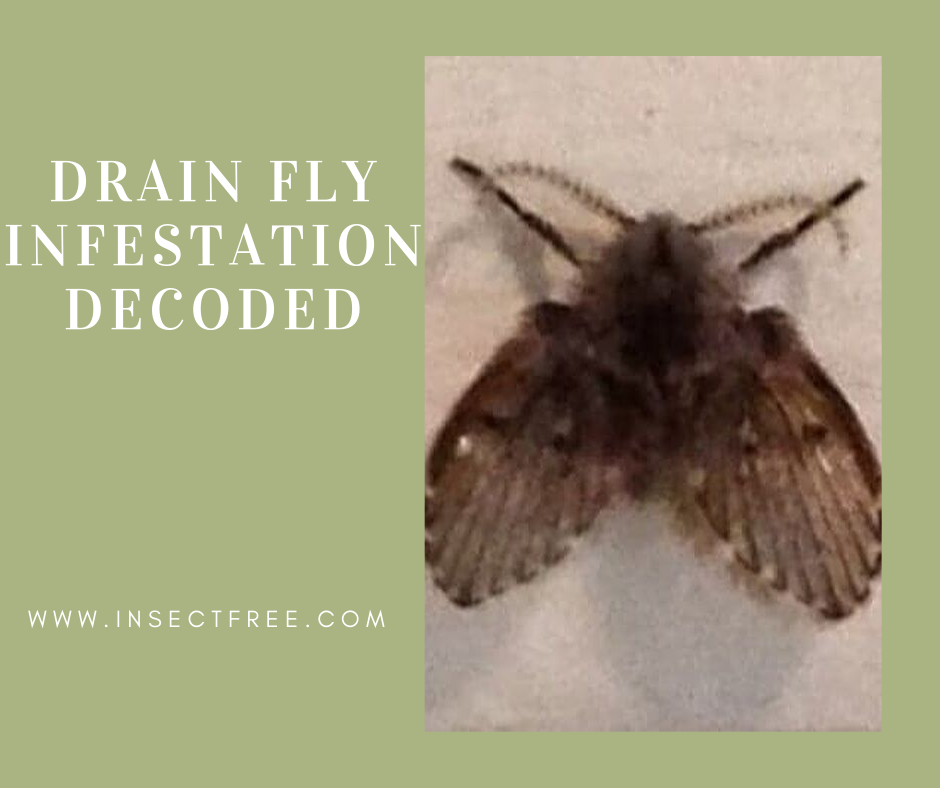
The bug we will be talking about today is the Moth Fly, also known as a Drain Fly. Any fly that nests in a drain or very wet conditions is called a Drain Fly. This insect looks different than other drain dwellers. The Moth Fly looks like its name implies, a small moth. To be clear, all Moth Flies are Drain Flies, but not all Drain Flies are Moth Flies.
Moth Flies are a small mothlike creature. They grow to about 1/8 inch in length and are covered in small hairs. Although they do fly, they are not very good at it. This insect has what is known as Complete Metamorphosis. Essentially this means they start as an egg, move onto the larvae stage, go into a cocoon, then becomes an adult. So, all Moth Flies you see are actually adults. Also, this means that the adults and the young live in completely different areas.
Moisture and Organic Material
Drain Flies require moist conditions for survival. Having an Infestation means there is at least one wet area close by the actual flies. Some of these areas include wet shower floors that do not get a chance to dry, dirty or clogged drains that have a build-up of organic material and even condensation drip lines. Leaks in the wall could also be a culprit. These insects cannot survive without wet environments. Fixing the moisture issue will solve the infestation.
The moth fly larvae will remain in the wet areas until they pupate and become the adult you see flying around. When you have located the area where these bugs are breeding, you may see the drain fly worms moving around. When you do, you know the moisture issue is very nearby.
How to get rid of Drain Flies
The best way to control a drain fly infestation is to locate and eliminate the water issue. Then, let the area dry out completely before putting a wall or floor back together. If the culprit is a drain, be sure to clean thoroughly. You will know if it is the drain fly larvae source because you will notice a large organic buildup.
If you locate the source of the infestation, in most cases, a drain fly killer will not be necessary. Keep in mind that this pest is a shortlived problem. Remove their nesting sites, and the bug goes away. Leave the nesting site, the insect remains.